Jun 26, 2026Market Insights & Trends
Popular Supplement Categories for New Brands in 2026
Discover popular supplement categories 2026 and OEM solutions for new brands in weight, sleep, beauty, sports, and women's health.
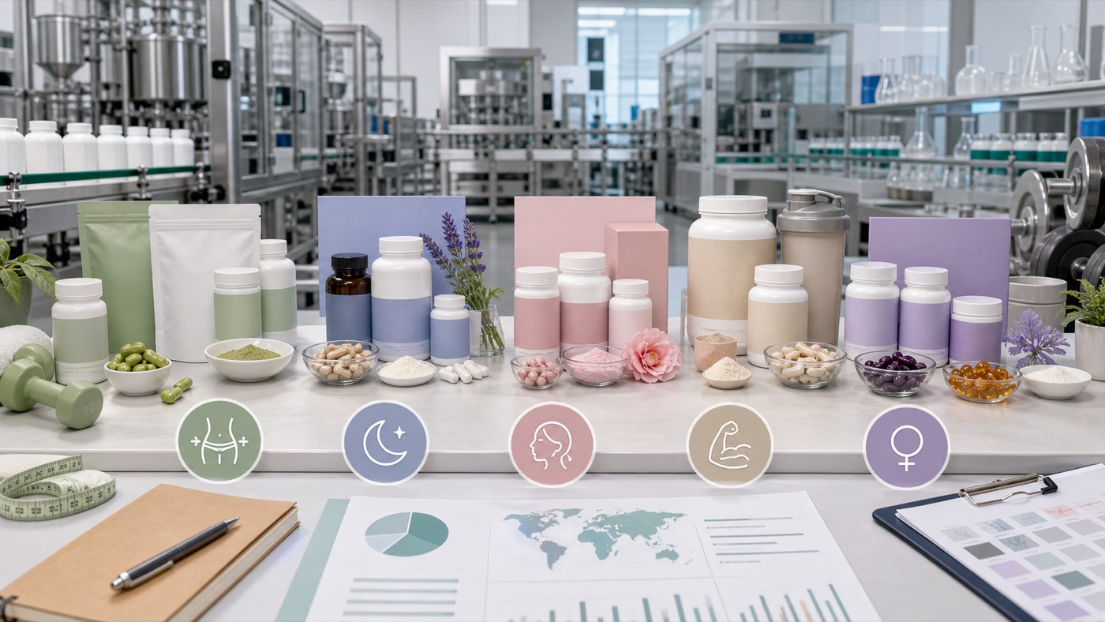
Market insights are valuable only when they can be translated into practical product development. For supplement brand owners, importers, distributors, startup founders, and purchasing managers, popular supplement categories 2026 should be evaluated together with formula feasibility, dosage form selection, packaging planning, quality control, MOQ, and lead time.
The supplement market is moving quickly, but successful brands still depend on reliable manufacturing execution. A trend may create demand, yet poor formulation, unstable packaging, weak documentation, or inconsistent production can damage a launch. This is why professional OEM/ODM support is important for brands that want to move from opportunity to finished goods.
This article explains the market direction from a B2B manufacturing perspective and shows how an experienced supplement manufacturer can support product planning, quality systems, packaging customization, and long-term brand growth.
Industry and Product Overview
New supplement brands entering the market in 2026 need to choose categories carefully. A popular category can create demand, but it can also attract strong competition. The best opportunity is usually found where market demand, brand positioning, formula feasibility, packaging quality, and reliable manufacturing support come together.
For startups, importers, and e-commerce sellers, category selection should be connected to production realities. Weight management, sleep support, beauty, sports nutrition, and women's health all have different dosage form options, ingredient considerations, MOQ levels, testing needs, and packaging expectations.
For B2B supplement companies, market direction should be connected to operational planning. A brand may identify a strong category opportunity, but the product still needs a feasible formula, available raw materials, stable production process, suitable packaging, and a quality control plan that supports repeat orders.
Manufacturers with OEM and ODM experience can help brands evaluate whether a concept is realistic before too much time is invested in artwork, marketing, or channel preparation. This early technical review is especially useful for startups and importers that need to control launch risk.
Manufacturing Process
Formula Development
Formula development begins with the brand's target market, dosage form, ingredient direction, serving size, flavor expectations, and price position. For trend-driven products, the manufacturer should review whether the desired ingredients can be used effectively in capsules, tablets, gummies, softgels, powders, or liquids.
Raw Material Sourcing
Raw material sourcing affects cost, consistency, lead time, and product quality. A professional manufacturer should review supplier documents, specifications, ingredient origin, availability, and testing requirements. Specialty ingredients, natural colors, botanical extracts, probiotics, and functional blends may need additional planning before production.
Ingredient Testing
Ingredient testing helps confirm identity, quality, and suitability for production. Depending on the material and target market, testing may include appearance, moisture, microbiology, heavy metals, assay, or other product-specific checks. Testing expectations should be discussed before quotation and sampling.
Production Process and Packaging
Production steps depend on the dosage form. Capsules require blending and encapsulation, tablets may require granulation and compression, gummies require cooking and depositing, powders need uniform blending and filling, and softgels require specialized filling and drying. Packaging should be selected to protect the product and support the brand position.
Quality Control and Compliance
Raw Material Inspection
Quality control begins with incoming materials. A manufacturer should check materials against approved specifications and confirm that documents match the purchased ingredient. This helps reduce contamination risk, formula inconsistency, and production delay.
In-Process Quality Control
In-process quality control monitors the product during manufacturing. Checks may include blend uniformity, fill weight, capsule appearance, tablet hardness, gummy weight, moisture, powder flow, seal integrity, label accuracy, and packaging count. These controls help keep the batch aligned with the approved specification.
Finished Product Testing
Finished product testing verifies quality before shipment. The testing plan should match the formula, dosage form, and destination market. Brands may request certificates of analysis, microbiology results, heavy metal testing, stability information where available, and other documentation required by importers or sales channels.
GMP Compliance
GMP compliance supports hygiene, equipment cleaning, production records, material traceability, personnel training, deviation handling, and batch release. For brands using market trends to build new products, GMP systems help protect long-term trust and reduce the operational risk of rapid launch.
OEM/ODM Manufacturing Advantages
Custom Formulation
Custom formulation allows brands to respond to market demand with a more differentiated product. The manufacturer can help adjust active ingredients, excipients, flavors, colors, capsule type, gummy texture, powder solubility, and serving size so the concept becomes practical for production.
Private Label Services
Private label services help brands enter a growing category faster. Existing formulas and established production procedures can shorten development time, while packaging and label customization allow the customer to build a distinct brand identity.
Packaging Customization
Packaging is an important part of market positioning. Bottles, jars, pouches, sachets, cartons, labels, caps, and desiccants should be selected based on product stability, shelf appeal, MOQ, and shipping requirements. Premium packaging can support brand value when it is matched with reliable production quality.
Flexible MOQ and Export Experience
Flexible MOQ discussion helps startups and established brands test new opportunities without creating unnecessary inventory pressure. Export experience is also important for global buyers because documentation, carton marks, pallet requirements, and shipment coordination must be handled clearly.
Market Insights Brands Should Consider
Weight Management
Weight management remains a large category, but brands need to approach it with careful positioning and compliance awareness. Products may use capsules, tablets, powders, or gummies, depending on the formula direction. Manufacturers can help review ingredient feasibility, serving size, and packaging format.
Sleep Support
Sleep support products are popular because they fit daily lifestyle routines. Capsules, gummies, tablets, and powders can all be considered. Taste, dosage format, ingredient compatibility, and market-specific compliance should be reviewed before production.
Beauty Supplements
Beauty supplements are strong candidates for premium private label launches. Common formats include gummies, capsules, powders, and liquids. Packaging quality matters because the category is closely tied to brand image and consumer trust.
Sports Nutrition
Sports nutrition includes powders, capsules, tablets, and functional blends. Flavor development, solubility, ingredient sourcing, and packaging durability are important. For powders, blending uniformity and filling accuracy are key manufacturing concerns.
Women's Health
Women's health products can cover several positions, from daily wellness to beauty, minerals, and lifestyle support. Brands should work with manufacturers that understand formula feasibility, label requirements, and dosage form selection for the intended market.
Product Solutions
Trend-based product development should result in practical manufacturing solutions, not only market ideas. Examples include:
- Private label sleep gummies for e-commerce brands
- Beauty capsules or gummies with premium packaging
- Sports nutrition powders in jars, tubs, or pouches
- Women's health capsules with vegetarian capsule options
- Weight management tablets or capsules with clear documentation
The right product solution depends on target audience, sales channel, claims strategy, packaging expectations, and launch budget. A manufacturer can help compare dosage forms, MOQ, lead time, testing requirements, and packaging options before the brand makes a final decision.
FAQ
What is the MOQ for trend-based supplement products?
MOQ depends on dosage form, formula complexity, packaging materials, and production setup. Standard capsules or tablets may be more flexible, while gummies, powders, softgels, and custom packaging may require higher quantities. A manufacturer should explain MOQ based on real production factors.
How long does it take to launch a new supplement product?
Lead time depends on formula approval, sampling, raw material sourcing, packaging production, factory scheduling, quality testing, and shipment preparation. Private label products are usually faster than fully customized formulas.
Can the formula be customized for a market trend?
Yes. An OEM/ODM manufacturer can support custom formulation, ingredient adjustment, flavor development, dosage form selection, and packaging alignment. The formula should also be reviewed for feasibility and target-market compliance.
What certifications should brands consider?
Brands commonly review GMP systems, facility registration where applicable, HACCP or ISO-related systems, quality management procedures, and product-specific testing capability. Requirements vary by destination market and product type.
Can a manufacturer provide private label support?
Yes. Many supplement manufacturers provide private label services with existing formulas, packaging selection, label size guidance, production, testing, and export preparation. This is useful when brands want faster market entry.
Related Products
- Private Label Capsule Supplements
- Custom Gummy Supplements
- Sports Nutrition Powder Supplements
- Private Label Beauty Supplements
- Softgel Supplement OEM Products
Related Articles
- Top Supplement Industry Trends Brands Should Watch in 2026
- Why Gummies Are Becoming One of the Fastest Growing Supplement Formats
- How Consumer Preferences Are Changing the Supplement Industry
- The Future of Private Label Supplement Brands
Conclusion
Popular Supplement Categories for New Brands in 2026 is more than a market topic. For supplement brands, it is a reminder that product strategy, manufacturing capability, quality control, packaging, and supply chain planning must work together. Trends can create demand, but reliable OEM/ODM execution turns demand into a product that can be produced, tested, packed, shipped, and reordered.
If you are planning a private label or custom supplement project, an experienced manufacturing partner can help evaluate formula feasibility, dosage form options, MOQ, packaging, testing, and export requirements. Contact our team to discuss your next supplement product and build a production plan that supports long-term brand growth.